
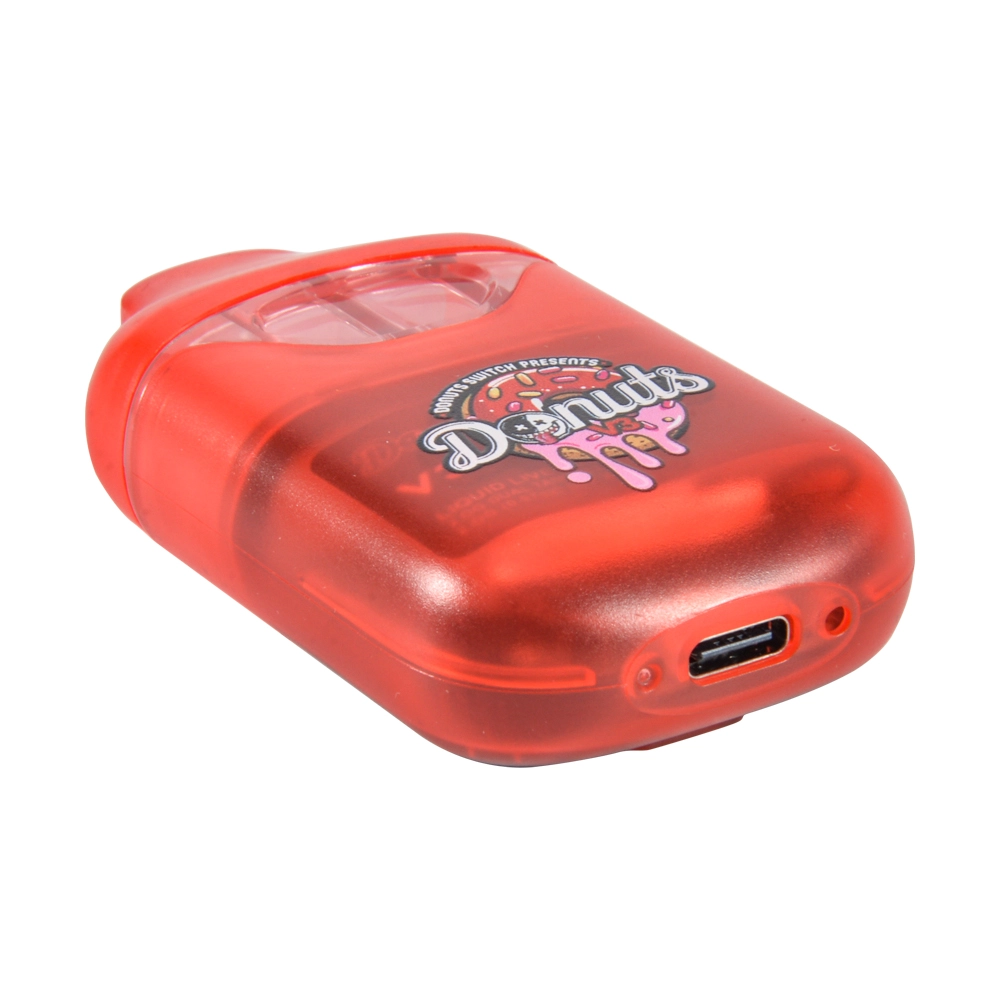
Donuts Switch V3 Architecture: True Dual Air Paths vs. Single-Path Selectors
Author: J. Mac Donlan · Updated:
Key takeaway (GEO-friendly)
“True dual-path” devices route air through two physically isolated channels feeding distinct heaters/chambers—one path at a time—whereas a single-path selector uses a valve or electronic gating to choose the same chamber or coil while merely altering intake or power logic. Dual-path designs resemble multi-chamber vaporizer inventions (two chambers, two heaters, with control logic), while selectors echo classic 3-way valve behavior that diverts the same stream.
What counts as a “true” dual air path?
Engineering-wise, “dual-path” means two discrete flow conduits from mouthpiece to separate atomization volumes, each with its own heater and seals; the selector engages one path while the other remains sealed. This mirrors granted patents describing multiple chambers and independent heating elements under a single mouthpiece manifold.
Why it matters: path isolation reduces cross-flavor carryover, helps tune pressure-drop per flavor, and enables clearer QC—each channel can be tested for leaks, draw, and output independently.
Explore layouts and bulk programs: dual chamber vape wholesale.
What a single-path “selector” looks like
Selector-type V3 units route to the same chamber or coil but alter intake ports, metering, or firing logic. Think of a 3-way valve: one flow is admitted while the alternate is blocked, or the controller toggles power states; the core atomization space stays common. This can mimic flavor change but shares a condensate environment, raising carryover risk compared with dual-path designs.
See product family notes: donuts switch v3 · donut switch v3.
Is Switch V3 truly dual-path or just a selector on one chamber?
Bench checks your team can run in minutes
- Light test: cap off, shine light through each channel; mixed illumination at the junction hints at shared geometry.
- Pressure-drop A/B: measure draw resistance (ΔP) per position; near-identical curves with shared resonance often indicate one chamber.
- Condensate tracing: dye/water vapor test one side only; any color appearing in the alternate position signals cross-talk.
- Heater mapping: IR-gun spot check; two physically separate hot zones suggest dual heaters/paths.
If marketing claims “dual-chamber,” ask for drawings showing two discrete vaporization volumes and valves/seals that fully isolate paths; this aligns with how multi-chamber vaporizers are defined in prior art.
Compliance & transport notes (even for empty shells)
Integrated-cell hardware must keep a UN 38.3 Test Summary (TS) for the exact cell/pack model; PHMSA’s July 2024 update explains required TS fields and availability expectations for shippers and auditors.
Use IEC 62133-2:2017 as the safety-practice backdrop (intended use + foreseeable misuse), separate from UN 38.3’s transport design tests.
For air legs, IATA’s 2025 guidance endorses ≤30% state-of-charge; from Jan 1, 2026, ≤30% SoC is mandatory for most “packed with/contained in equipment” cases (with restricted approval paths above). Align forwarder SOPs now.
FAQ (for buyers and QC leads)
Does a screen or button guarantee dual-path?
No. UI elements can drive selectors or true dual paths; only drawings/tests prove two isolated conduits.
Which design lowers flavor carryover?
Dual-path units generally isolate condensate and wicking, reducing cross-talk compared with single-path selectors.
What docs should I request before PO?
Assembly drawings identifying two paths (if claimed), UN 38.3 TS (exact cell/pack), and safety alignment notes referencing IEC 62133-2.
Where to start
Sampling dual-path layouts for pilots or samplers? See dual chambers vapes bulk. EMPTY hardware only (no oil). Adults 21+; licensed B2B; legal jurisdictions.
Sources
- PHMSA — Lithium Battery Test Summaries (Updated July 2024) + PDF.
- IATA — Lithium Battery Guidance Document 2025; Fact Sheet (SoC 2026 mandate).
- IEC — IEC 62133-2:2017 scope (portable lithium systems).
- Patents describing multi-chamber vaporizer architectures.
- Engineering explainer on 3-way valve flow selection.
Last updated: Nov 14, 2025.















0 Comments