

Whole Melt Phase 5 Dual Chamber Explained: How It Works and What Wholesale Buyers Should Check
By Casey Rowlands
Whole Melt Phase 5 has attracted attention for a simple reason: the dual-chamber format gives buyers something visibly different from a conventional single-chamber disposable. But for wholesalers, distributors, smoke shops, and brand buyers, appearance is only the beginning. The more important questions are how the two chambers work, how easy the device is to operate, and whether the hardware remains consistent across a larger order. This guide takes a practical look at Phase 5-style dual-chamber hardware, including the switching system, basic operating process, quality-control points, and considerations that matter before placing a bulk order. **Buyer note:** This article discusses **empty hardware for wholesale and customization purposes only**. No oil or filled products are supplied.
What Is Whole Melt Phase 5?
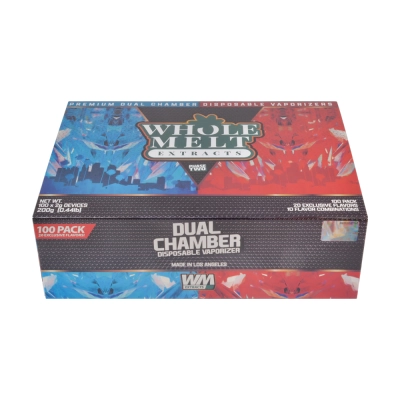
Phase 5 refers to a newer dual-chamber hardware format built around two separate internal reservoirs rather than one conventional chamber. The design combines the two sides into a single body while giving the user a way to select which side is active. For someone seeing the device for the first time, the main attraction may be its appearance. For a wholesale buyer, however, the more useful way to evaluate a whole melt phase 5 dual chamber model is to look at the complete hardware system: chamber separation, selector response, airflow consistency, charging performance, body assembly, and display behavior. Those details determine whether the design is simply visually interesting or practical enough for repeat distribution.
How Does the Dual-Chamber Design Work?
The basic idea is straightforward. Instead of relying on one chamber and one flow path, the hardware provides two separate chambers inside the same device. A selector controls which side is active. The user chooses one chamber before drawing, and the airflow and activation system then operate through the selected side. This design has several practical implications for wholesale buyers. First, the selector needs to give clear feedback. A customer should not have to guess which chamber has been selected. Second, airflow should remain reasonably consistent when moving between the two sides. A noticeable difference between chambers can quickly become an after-sales complaint. Third, the internal separation needs to be considered during QC. Dual-chamber construction introduces more components and interfaces than a simpler single-chamber design, so sample testing becomes especially important before a large purchase.
How to Use Phase 5 Dual-Chamber Hardware
Although the design looks more complicated than a standard disposable, normal operation should remain simple.
1. Inspect the hardware first
Before testing, check the body, mouthpiece, charging port, screen area, and chamber windows if they are visible. Look for obvious assembly problems or shipping damage. Wholesale buyers should perform this check across several randomly selected units rather than relying on one presentation sample.
2. Remove protective materials
Remove any protective caps, seals, stickers, or transport packaging that could obstruct the mouthpiece or airflow path. This sounds basic, but it helps separate actual hardware problems from problems caused by packaging or incorrect handling.
3. Select one chamber
Move the selector completely into the intended position before activation. Avoid leaving the control between positions. A clearly defined switching position makes the device easier to understand and gives buyers a more reliable way to test each side separately.
4. Test the first chamber
Use a controlled, steady draw when checking activation rather than pulling excessively hard. During hardware evaluation, pay attention to activation response and any screen or indicator feedback. The goal is not simply to confirm that one sample turns on, but to determine whether operation feels predictable.
5. Stop before switching sides
Finish the draw before changing the selector. Once the first side has been checked, move the selector fully to the second position and test the other chamber separately. Switching while the device is actively being drawn is not a useful way to evaluate chamber consistency.
6. Check charging behavior
If battery power is low, use a suitable cable and stable charging source. Observe whether the charging indicator responds normally and whether the charging port feels secure. For wholesale inventory, charging-port consistency is worth checking because it can become a frequent source of customer complaints when hardware quality varies between units.
Why Dual-Chamber Hardware Is Interesting to Wholesale Buyers
A dual-chamber design gives retailers a feature that can be understood visually without requiring a long technical explanation. That can make it easier to distinguish the product from conventional hardware on a crowded shelf. This is also why buyers researching a whole melt extracts disposable may eventually move beyond questions about appearance and start comparing chamber design, switching mechanism, display, charging system, packaging, and batch consistency. From a distributor's perspective, novelty can help generate initial demand, but repeat orders normally depend on something less exciting: consistency. If one batch operates smoothly and the next batch creates switching, charging, or assembly complaints, the visual appeal of the device matters much less. Wholesale evaluation therefore needs to balance design with practical reliability.
What Should Wholesale Buyers Check Before Ordering?
For a dual-chamber model, a good sample inspection should go beyond simply turning the device on.
Selector consistency
Test the selector across multiple samples. Movement should feel deliberate and reasonably consistent from unit to unit. A switch that is noticeably looser on some units than others deserves further investigation before a larger order.
Chamber-to-chamber consistency
Both sides should be evaluated separately. The purpose is to identify obvious differences in activation or airflow before inventory reaches downstream customers.
Screen and indicator response
If the model includes a display or visual indicator, check whether it responds consistently during activation and charging. For retail-oriented hardware, a malfunctioning screen can become a perceived product failure even when other parts of the device still operate.
Charging-port assembly
Check port alignment and physical stability across several samples. A charging port is a small component, but it receives repeated physical contact throughout the life of the hardware and is therefore worth including in incoming inspection.
Body and mouthpiece assembly
Compare shell alignment, mouthpiece fit, seams, finish, and visible chamber positioning across multiple units. These details influence both perceived quality and the professional appearance of inventory at retail.
Why Sample Testing Matters More With Dual Chambers
A single sample can tell a buyer whether a design looks attractive. It cannot tell the buyer whether a production batch is consistent. That distinction becomes more important with dual-chamber hardware because there are more functional points to evaluate: two chamber paths, a switching mechanism, charging components, activation hardware, and potentially a screen or indicator system. Before committing to volume, buyers should request samples representative of the intended production specification and establish their own incoming QC checklist. Useful questions include: * Does the selector feel consistent across samples? * Does each side activate as expected? * Is airflow reasonably consistent? * Is the charging port correctly aligned? * Does the display respond normally? * Are shell gaps and mouthpiece fit consistent? * Does the packaging protect the hardware during transportation? These observations are more useful for a purchasing decision than simply asking whether the model is popular.
Phase 5 Vol. 2: What Should Buyers Compare?
When evaluating newer versions or variations, buyers should avoid assuming that a revised appearance automatically means better hardware. If you are comparing a whole melts phase 5 vol.2 dual chambers 2g disposale with an earlier configuration, compare the physical and functional differences that actually affect your business. Look at the selector design, chamber layout, screen behavior, charging system, packaging construction, customization options, and consistency of the samples you receive. For a distributor, the better version is not necessarily the one with the most visual features. It is the version that balances market appeal with predictable QC and manageable after-sales support.
Who Is This Type of Hardware Best Suited For?
Phase 5-style dual-chamber hardware may make sense for distributors, wholesalers, retailers, and private-label buyers looking for a more differentiated format than a basic single-chamber device. It can be particularly useful when: * shelf differentiation is important; * customers already recognize dual-chamber designs; * the retailer wants a feature that is easy to demonstrate; * the buyer wants a more visually distinctive product family; * OEM packaging or branding is part of the project. It may be less attractive when the purchasing priority is simply the lowest possible hardware cost or the simplest possible construction. The right choice depends on the target market rather than on the popularity of a particular design alone.
Questions to Ask a Supplier Before a Bulk Order
Before moving from samples to a larger purchase, buyers should confirm the commercial details as carefully as the hardware details. Ask about MOQ, sample availability, production lead time, current inventory, packaging configuration, logo customization, carton quantities, replacement policy for verified hardware defects, and the QC process used before shipment. It is also worth asking whether the final bulk specification will match the samples you approved. A good sample has limited value if materials, components, or assembly standards change during mass production. Keeping these details documented makes it easier to evaluate repeat orders and resolve quality questions later.
Empty Hardware vs. Filled Products
This distinction should be clear before an inquiry is submitted. We focus on **empty hardware for wholesale, distribution, OEM, and customization projects**. We do not supply oil or filled products. For professional buyers, this means discussions should focus on hardware specifications, quantities, samples, packaging, customization, production schedules, QC requirements, and shipping arrangements. Clearly separating empty hardware from finished products also helps purchasing teams avoid wasting time requesting products that are outside the supplier's scope.
Final Thoughts
Whole Melt Phase 5-style hardware is interesting because the dual-chamber format combines a recognizable visual design with a switching function that is easy for customers to understand. But wholesale buyers should evaluate more than appearance. Selector consistency, chamber behavior, charging-port assembly, screen response, body finish, packaging protection, sample quality, and batch consistency all deserve attention before a larger purchase. For distributors and private-label buyers, the best approach is to treat the device as a complete hardware system rather than simply another trending model. Understand how it works, test representative samples, define your QC expectations, and confirm the commercial terms before scaling the order. That approach makes the article's main question much more useful: not simply **“What is Phase 5?”**, but **“Is this dual-chamber platform suitable for my market and my next wholesale order?”**











0 Comments