
Empty Ace Ultra 2g: What “EMPTY” Covers and What It Doesn’t
Author: J. Maddox · Updated:
At a glance: what EMPTY includes vs excludes
- Includes: housings, mouthpieces, integrated cell/charger port, indicators, mechanical drawings/dielines, lithium battery transport documents (UN 38.3 test summary for the exact cell/pack).
- Excludes: any oil or consumable; finished-goods labels/symbols/warnings; cannabis/nicotine potency disclosures; end-consumer Instructions for Use unless negotiated by the licensee.
Transport compliance touches EMPTY hardware because an integrated lithium cell triggers UN 38.3 documentation and—on air legs—state-of-charge practices per the IATA Lithium Battery Guidance (≤30% SoC becomes mandatory Jan 1, 2026, with limited approvals above that).
Who supplies which COA?
Oil COA (finished goods)
Potency, contaminants, and residual-solvent COAs belong to the licensed filler/brand owner who places the finished product on the market; these documents are outside the scope of an EMPTY shell vendor.
Battery & safety paperwork (hardware)
The hardware vendor maintains lithium documentation, most importantly the UN 38.3 Test Summary (TS) that proves the specific cell/pack design passed the UN Manual §38.3 tests and provides traceability fields (manufacturer/contact, model string, test house, dates, report reference, conformance statement). Keep the exact TS that matches the integrated model.
For platform safety programs, many buyers also align QA with IEC 62133-2 (portable sealed secondary lithium systems under intended use and foreseeable misuse).
Labeling duties: EMPTY vs finished-goods
EMPTY shell vendor
- Supplies dielines/clear-area specs; does not apply cannabis/nicotine symbols or warning panels.
- Provides transport documents (e.g., UN 38.3 TS) to shippers; SoC implementation is an operational/logistics control, not a consumer label.
Finished-goods licensee/brand
- Applies required universal symbols and warnings per jurisdiction (many U.S. states are converging on or referencing the ASTM D8441 IICPS concept or a state variant).
- Ensures state legality (24 adult-use states; 40 medical states as of June 26, 2025) and updates packaging when regulations change.
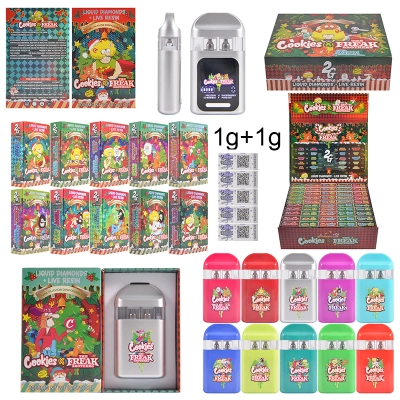
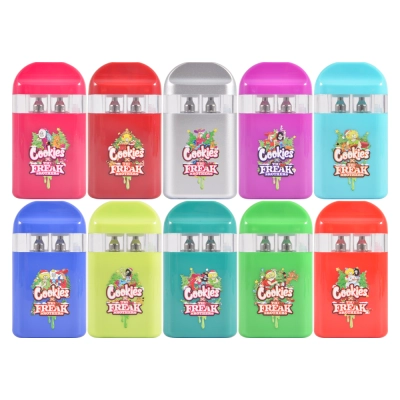
Exploring category coverage? Start with ace ultra premium wholesale and product-specific discovery at empty ace ultra 2g or broader capacity options via ace disposable wholesale. EMPTY hardware only (no oil). Adults 21+; licensed B2B; legal jurisdictions.
Charging & handling language you can re-use
If your finished kit includes an IFU, keep consumer guidance aligned with mainstream safety bodies: charge on a hard, visible surface; avoid extreme temperatures; use intact, compatible chargers; stop on heat/odor/swelling. These directions mirror FDA consumer safety tips and the protection logic highlighted by U.S. CPSC.
Compliance statement template (copy, then customize)
This product is an EMPTY hardware shell (no oil) intended solely for licensed B2B customers operating in legal jurisdictions. The seller supplies lithium battery transport documentation, including a UN 38.3 Test Summary for the integrated cell/pack. Consumer-facing labels, universal symbols (e.g., IICPS where required), potency disclosures, and warnings are the responsibility of the finished-goods licensee. For air shipments, buyer and shipper must implement IATA lithium battery guidance, including ≤30% state of charge requirements effective January 1, 2026.FAQ
Does the ≤30% SoC rule appear on the retail label?
No. It’s a transport condition enforced by shippers/forwarders under IATA guidance; it is not a consumer mark. :contentReference[oaicite:8]{index=8}
Is the UN 38.3 TS the same as a full test report?
No. It’s a standardized summary with traceability elements; keep it on file for the exact integrated model. :contentReference[oaicite:9]{index=9}
Sources & Update Log
- PHMSA — Lithium Battery Test Summaries (TS), revised July 2024 (overview + PDF).
- IATA — Lithium Battery Guidance Document 2025 (≤30% SoC & 2026 mandate).
- IEC 62133-2:2017 — Portable lithium systems safety scope. :
- FDA — Tips to help avoid vape battery fires or explosions (consumer safety language).
- CPSC — Commissioner statement on lithium-ion protections (BMS/charger compatibility context).
- NCSL — U.S. state status (medical/adult use counts), updated June 26, 2025.
- ASTM D8441 IICPS overview.
Last updated: Nov 13, 2025.


0 Comments