
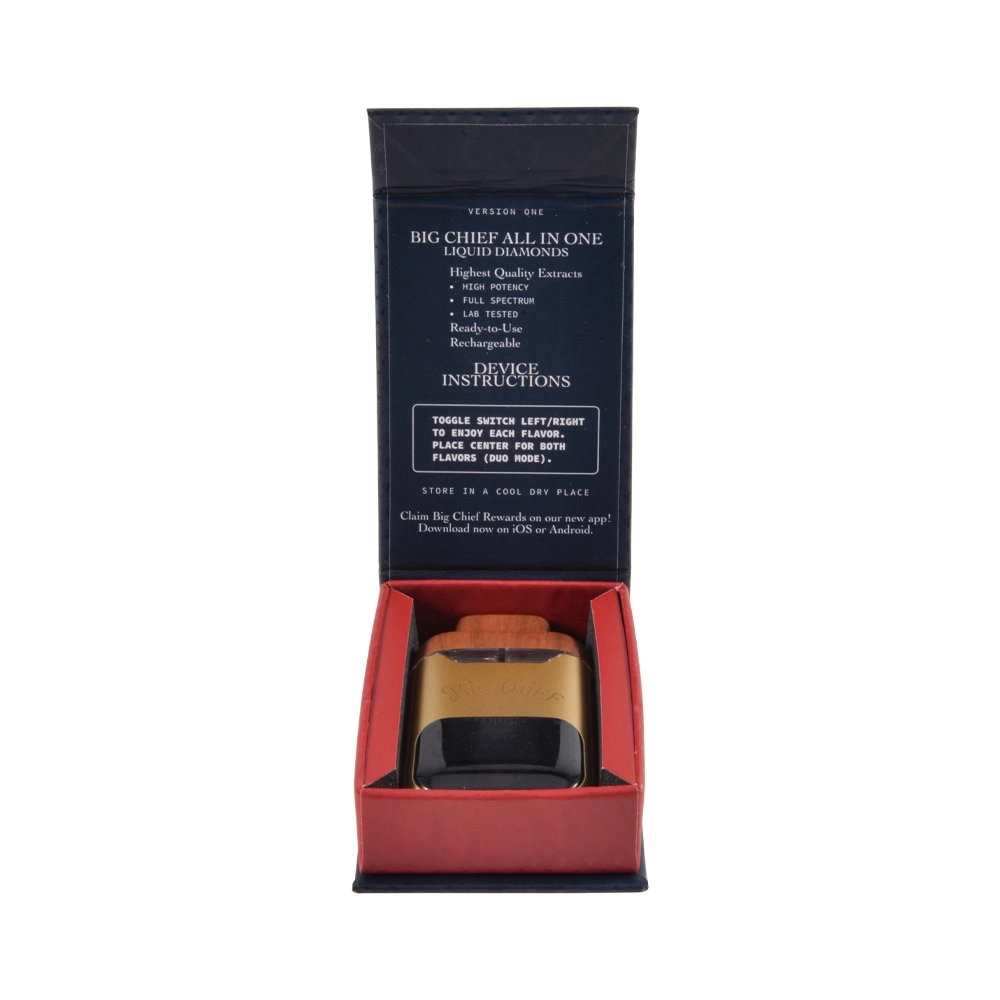
How to QC Big Chief Duo Empty Devices: Dual-Chamber Structure, Coil Specs, and Seal Integrity
Big Chief Duo–style platforms win orders when they do three things reliably: keep chambers isolated, heat consistently, and stay sealed through shipping + storage. The problem is that dual-chamber designs can hide defects that single-chamber devices don’t—tiny divider leaks, uneven wick loading, micro-gaps at the mouthpiece weld, and coil-to-coil variation that only shows up after temperature cycling.
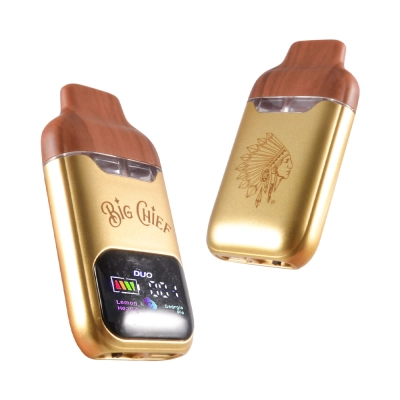
Below is a BoFu-ready QC system you can run on every lot before you scale reorder volumes. Where possible, it references measurable specs already listed on Vapebarlife’s Big Chief Duo page—like 1g+1g capacity, 1.4Ω resistance, and 350mAh rechargeable battery. :contentReference[oaicite:0]{index=0}
1) Define “Pass” Before You Touch the Carton
QC objective for dual-chamber empties
- No cross-bleed between chambers under heat + movement (isolation holds).
- Stable electrical behavior (coil resistance and continuity within your acceptable band).
- Seal integrity (no leaks at tank seams, divider joints, or mouthpiece welds).
- Repeatability across reorders (no silent spec changes).
Suggested defect classes (for B2B decisions)
Critical (reject lot)
- Chamber cross-leak / divider failure
- Hard leak (visible oil pathway once filled)
- Short circuit / non-functional draw activation
Major (hold for rework / partial reject)
- Mouthpiece micro-gaps, inconsistent weld lines
- Resistance drift beyond your spec window
- Loose fit causing wobble or air bypass
2) Dual-Chamber Structure: What to Inspect First
Understand the isolation points
Dual-chamber devices fail at interfaces. Your job is to identify every “join” that can create a leak path: the chamber divider, tank-to-chimney joints, gasket seats, and the mouthpiece weld/snap line.
Fast structural checks (10 minutes per sample set)
- Divider alignment: look for offset dividers or uneven plastic flow lines.
- Chimney symmetry: left/right chimneys should be visually centered and equal height.
- Air path integrity: no flashing, burrs, or debris around airflow inlets.
- Fit & torsion: gentle twist test—no creak, no rocking, no cap lift.
Pro tip: dual-chamber issues often appear after movement + heat. If your workflow allows, pair visual inspection with a brief shake + warm soak.
3) Coil Specs: How to Validate Electrical Consistency
Start with what the SKU claims
Vapebarlife’s Big Chief Duo listing states Resistance: 1.4Ω and Rechargeable Battery: 350mAh. :contentReference[oaicite:1]{index=1} Treat that as your baseline label spec—then verify reality with measurements.
Incoming electrical checks (recommended)
| Check | Method | Pass/Fail logic |
|---|---|---|
| Coil resistance (per chamber) | 4-wire or stable DMM measurement at room temp | Stay within your defined tolerance band around the target (e.g., 1.4Ω ± your window) |
| Continuity + no shorts | Continuity test between coil leads; verify no short to housing | No intermittent continuity; no unexpected continuity to chassis |
| Draw activation repeatability | Standardized pull test (same duration & force) | Consistent activation; no “dead on arrival” chamber |
4) Seal Integrity: The QC Step That Saves Reorder Headaches
Why “looks fine” isn’t enough
Visual checks catch gross defects, but micro-channels and weak seams can slip through. In packaging QC, ASTM methods commonly use a combination of visual seal inspection and leak-path detection (e.g., dye penetration approaches) to reveal channels. :contentReference[oaicite:2]{index=2} While devices aren’t medical pouches, the principle is identical: you’re hunting for microscopic pathways.
Practical seal tests for dual-chamber empties
A) Dry vacuum/pressure hold (pre-fill)
- Use a fixture to apply controlled vacuum/pressure to each chamber path.
- Watch for decay beyond your limit (sets your “seal holds” threshold).
- Run both chambers independently—dual systems can pass one side and fail the other.
B) Fit-line inspection (mouthpiece + tank seam)
- Check for channel lines, wrinkles, gaps, or uneven seam compression.
- Log recurring seam locations: “front-left weld line,” “divider corner,” etc.
Seal strength mindset (don’t skip this)
Packaging teams often quantify seal strength using standardized peel/strength concepts (e.g., ASTM F88 measures force required to separate a seal). :contentReference[oaicite:3]{index=3} For vape hardware, you may not run ASTM F88 directly—but you can borrow the same discipline: define a measurable “seam strength” check (pull-force, twist-force, or controlled pry test) and trend it over time.
5) Sampling Plan: Use AQL So Your QC Scales With Volume
Why AQL matters for BoFu buyers
When you move from 200 to 2,000+ units, you need a repeatable sampling standard. ISO 2859-1 defines acceptance sampling for inspection by attributes indexed by AQL, and ANSI/ASQ Z1.4 is the widely used equivalent framework for attribute sampling plans. :contentReference[oaicite:4]{index=4}
Simple AQL structure you can adopt
- Critical defects: AQL 0 (commonly treated as zero tolerance for criticals). :contentReference[oaicite:5]{index=5}
- Major defects: set a tight AQL aligned with your brand risk (common practice is stricter than minor).
- Minor defects: relaxed AQL (cosmetics that don’t impact function).
6) Big Chief Duo QC Checklist (Copy/Paste for Your SOP)
Incoming inspection (IQC)
- Verify SKU identity, carton labeling, and lot traceability.
- Check chamber structure: divider alignment, chimney symmetry, gasket seat quality.
- Measure coil resistance per chamber; record averages + outliers (target shown as 1.4Ω). :contentReference[oaicite:6]{index=6}
- Dry seal hold test (vac/pressure) on a defined sample size.
- Functional pull test for activation repeatability.
Pre-ship audit (OQC)
- Spot-check for spec drift (resistance trend shifts, fit-line changes).
- Random carton pull for damage, deformation, or mouthpiece lift.
- Re-run a quick seal integrity screen after conditioning (warm soak + movement).
7) Change Control: How to Stop “Silent Revisions”
What to lock down with your supplier
- Coil type and target resistance band (per chamber).
- Divider material + geometry (the #1 isolation driver).
- Gasket material, durometer range, and placement.
- Mouthpiece joint method (weld/snap), seam dimensions, and acceptance limits.
8) Shipping & Compliance: The Battery Paperwork Buyers Expect
UN 38.3 and “Test Summary” reality
For lithium batteries shipped internationally, UN 38.3 is the core transport testing basis. :contentReference[oaicite:7]{index=7} In the U.S., PHMSA has emphasized lithium battery test summaries as a key way for downstream shippers/consumers to confirm batteries were tested. :contentReference[oaicite:8]{index=8} For BoFu procurement, this isn’t a “nice-to-have”—it reduces freight friction and avoids last-minute carrier holds.
9) Map QC Outputs to Buying Decisions (BoFu-ready)
What your buyer wants to see in one page
- Lot number + sampling method (ISO 2859-1 / Z1.4 style).
- Resistance distribution per chamber (avg / min / max, reject counts).
- Seal integrity results (method + pass rate).
- Packaging + battery documents (UN 38.3 test summary availability).
10) Pricing & SKU Links (Internal references for your purchasing team)
Use category-level pricing as a benchmark, then tie it to the exact dual-chamber SKU you QC’d: chief vape price, big chief price wholesale, big chief 2g wholesale, big chief duo.







0 Comments