
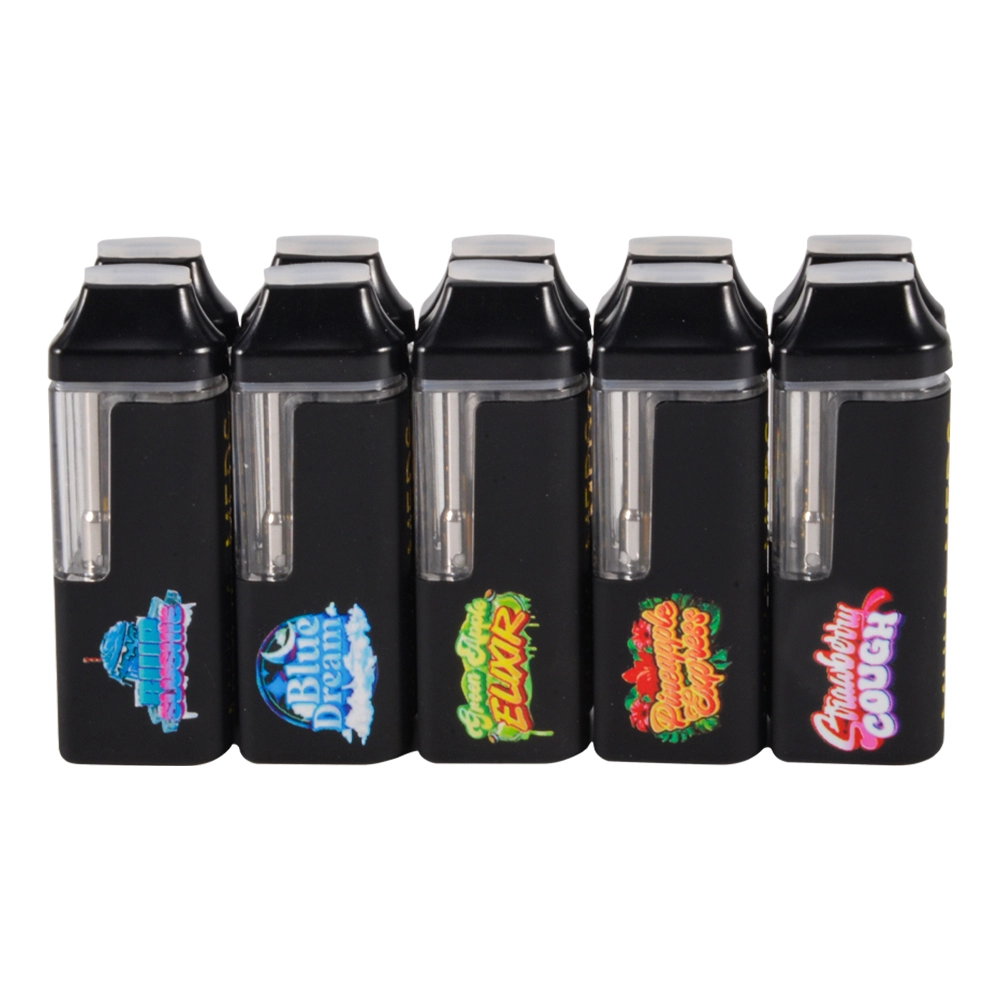
Muha Meds Empty Device Quality Breakdown: Coil, Battery, Airflow, Leak-Proofing
Type: MoFu (Wholesale buyer enablement) · Author: Riley Stanton
Hardware-only note: This article evaluates empty device hardware (no oil, no nicotine, no THC). Specs and QC methods below focus on repeat-order stability for distributors, retailers, and brand/OEM buyers.
“Looks premium” doesn’t win repeat POs—repeatable performance does. For Muha-style empty devices, wholesale buyers typically judge quality on four pillars: coil consistency, power delivery, airflow stability, and leak resistance. If any one of these fails, you’ll see the same outcomes: returns, negative reviews, and rework costs. This breakdown gives you a practical, purchase-ready framework to evaluate Muha Meds empty hardware before you scale.
If you’re buying for distribution or private label, start from the right product rails: muha meds wholesale, muha meds bulk, muha meds disposable wholesale.
What “High-Quality” Means in 2025 for Empty Devices
In 2025, the market standard has shifted from “it works” to “it works the same every time.” Strong hardware programs document: (1) coil-to-coil consistency, (2) stable voltage output under load, (3) predictable draw/airflow behavior, and (4) verified leak prevention under heat, altitude, and handling.
Quality should be proven through supplier traceability and repeatable tests—not marketing language. For shipping safety and battery compliance references, buyers often request proof aligned to UN transport testing (UN 38.3) and recognized lithium safety standards. See UN 38.3 context in the UN Manual of Tests and Criteria (Section 38.3) and battery safety frameworks such as IEC 62133-2 and UL 8139
Coil System: Consistency Beats “More Heat”
What to verify on coil builds
- Resistance window: Ask for a resistance target range and allowed tolerance (tight windows reduce “weak hit” vs “burnt hit” variability).
- Wicking design: Look for a feed path that supports viscous extracts without starving at cold starts.
- Contact integrity: Inspect welds/solder joints, spring contacts, and any plating used to reduce oxidation.
- Thermal repeatability: Strong coils maintain similar ramp behavior across units—critical for consistent customer experience.
Practical buyer move: request a small sample batch, then measure resistance and performance dispersion (not just “average”). Tight distributions generally correlate with fewer RMAs at scale.
Battery & Powertrain: Stable Output Prevents “Light-On / No Vapor”
What to verify on battery and control
- Cell capacity: Confirm mAh and ask whether it’s rated capacity or typical capacity; request the cell model/lot trace.
- Protection features: Over-charge, over-discharge, short-circuit, and over-current protection should be standard in modern lithium hardware.
- Voltage sag under load: The best indicator of “strong hit near the end” is how well the device holds output when the cell is partially depleted.
- Charge interface reliability: USB-C ports must be mechanically robust; loose ports become failure multipliers in wholesale channels.
If your market needs documented battery compliance references, align requests to recognized test and safety frameworks (UN transport testing and widely cited device safety standards)
Airflow Architecture: Draw Feel, Flavor Delivery, and Clog Risk
Airflow isn’t “just comfort.” It directly affects coil cooling, aerosol density, and clogging behavior. For B2B buyers, the goal is stable draw across temperature and handling conditions.
- Intake geometry: Confirm intake count, placement, and consistency (misaligned intakes cause unit-to-unit draw variance).
- Flow path sealing: Air should pass where it’s designed to—unintended leaks can weaken draw and increase condensation.
- Condensation management: Good designs reduce “spitback” and gurgle by controlling where moisture collects.
Buyer tip: test airflow on samples after cold storage and after warm handling. If draw changes dramatically, expect support tickets later.
Leak-Proofing: What Actually Prevents Leaks in Real Distribution
Wholesale leak issues usually come from three sources: poor sealing surfaces, inconsistent assembly torque/fit, or pressure/temperature swings during shipping. A “leak-proof” claim matters only if it survives real-world transport and shelf handling.
- Seal stack-up quality: Inspect O-rings/gaskets, compression fit, and surface finish where seals contact.
- Assembly control: Ask how they control torque/press-fit and how they detect out-of-spec units.
- Transport simulation: Request evidence of packaging/handling validation where appropriate (ISTA procedures are commonly referenced for package testing).
For packaging test references used in many B2B programs, see ISTA procedure information . If your channel requires child-resistant packaging concepts, ISO 8317 is a widely recognized reference
QC Gates That Predict Fewer Returns
High-performing suppliers run QC as a sequence of gates (incoming → in-process → final → pre-ship sampling). As a buyer, you don’t need their entire SOP—just the evidence that each gate exists and catches the failures that cost you money.
- Incoming inspection: verify critical parts (cell, coil assemblies, seals, housings) against tolerance targets.
- In-process checks: spot-check alignment, solder/weld integrity, and airflow path sealing.
- Final test: functional activation, draw test, and basic electrical checks.
- Pre-ship AQL sampling: consistent sampling helps catch drift before a full pallet becomes your problem.
Receiving Checklist for Distributors (Fast, Practical, Repeatable)
When a shipment lands, the goal is speed without missing the failures that become returns. Use a simple receiving checklist:
- Carton condition: crushed corners, water exposure, or re-taped boxes are immediate red flags.
- Random unit pull: sample from multiple cartons, not just the top layer.
- Activation + draw consistency: confirm stable draw and normal ramp across samples.
- Charge port check: verify USB-C fit and mechanical stability.
- Visual leak check: inspect seals, seams, and airflow holes for residue or seep marks.
- Document batch info: record lot/date codes for traceability before stock goes out.
Spec Sheet Snapshot: What to Ask Your Supplier to Provide
A credible supplier can provide a simple, consistent spec sheet. Here’s a buyer-friendly template you can request and compare across vendors.
| Area | Spec to Request | Why It Matters |
|---|---|---|
| Coil | Resistance target + tolerance; material notes; build consistency evidence | Predictable performance, fewer “weak/burnt” complaints |
| Battery | mAh; protection features; output stability under load | Reduces “light-on/no vapor” and end-of-life drop-offs |
| Airflow | Intake geometry + QC method; condensation management design notes | Stable draw feel, less clogging variability |
| Leak control | Seal stack-up design; assembly control; transport/handling validation references | Fewer leaks during shipping and shelf time |
| Traceability | Lot/batch coding approach; QC gate records availability | Faster resolution when issues appear |
FAQ for Wholesale Buyers
How do I reduce returns when scaling from samples to master cases?
Lock a spec sheet, confirm QC gates, and keep one receiving checklist across every shipment. Most “sudden quality drops” happen when buyers scale without defining tolerances and sampling expectations up front.
What are the fastest checks to spot airflow and leak problems?
Pull samples from multiple cartons, do draw comparisons after cold storage and warm handling, then visually inspect seal interfaces and seams. If draw shifts dramatically between units, expect higher support volume.
What documentation should I ask for if my logistics partner is strict?
Request shipment-ready documentation aligned to lithium transport testing context (UN 38.3) and recognized safety/packaging references as needed (IEC/UL/ISTA/ISO). Keep it simple: “Which standard, which lab/report, which lot it applies to.”




0 Comments