
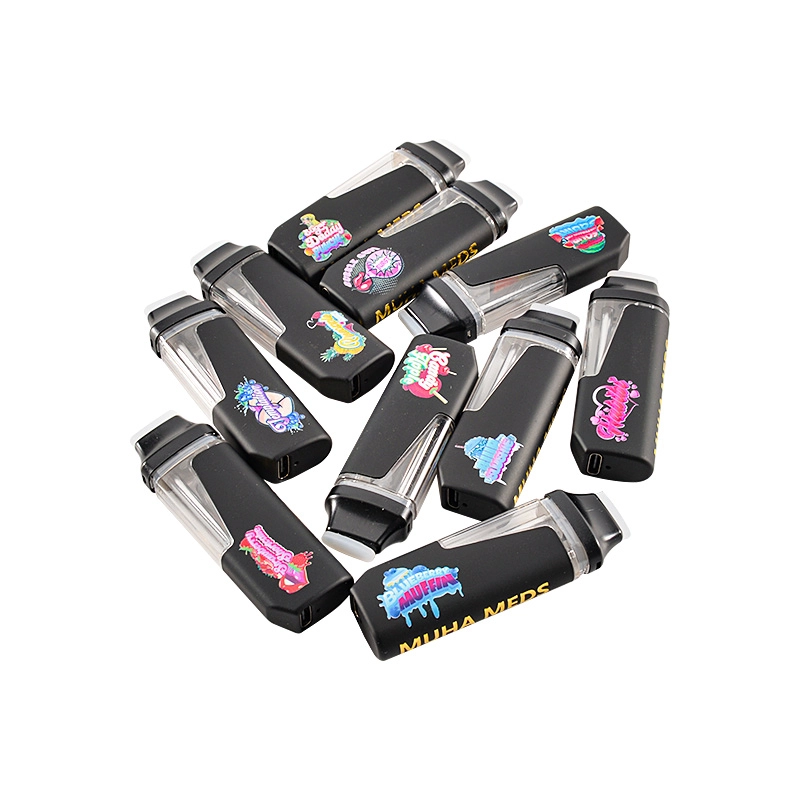
Why Empty Muha-Style Devices Need a Serious Quality Breakdown in 2025
For B2B teams in 2025, “Muha Meds” or Muha-style empty devices are no longer just a trendy shell – they’re an integrated hardware system: ceramic coil, lithium battery, airflow path and leak-proofing all locked inside a small, sealed disposable. Regulators treat these systems as ENDS components and parts, not just accessories, which means importers and wholesalers are expected to understand how the hardware behaves in real use, not just how the box looks.
This article is written as a MoFu (Middle-of-Funnel) guide for serious buyers who already know the Muha Meds look and format, and now want to go deeper: how to evaluate coil engineering, battery safety, airflow design and leak-proofing before committing to muha meds wholesale and long-term muha meds bulk programs.
Coil Engineering: Ceramic, Resistance and Oil Compatibility
1. Ceramic Coil vs Cotton: Why Ceramic Dominates Muha-Style Shells
Most modern Muha-style empty disposables use a porous ceramic coil paired with a metal heating element. For thick 2 g and 3.5 g formulations, ceramic offers:
- More uniform heat distribution across the oil film
- Reduced risk of hot spots and localized burning
- Better flavor stability over the full life of the device
2. Target Resistance Window for 2 g–3.5 g Devices
For most Muha-style 2 g and 3.5 g oils, the “sweet spot” is typically in the 1.2–1.6 Ω range. Too low (sub-ohm) and you generate excess heat, burning oil and stressing the battery; too high and the device feels weak or struggles with cold-flow oils. A modern QC program should be able to show you batch-level resistance distributions, not just a single nominal spec.
When evaluating a supplier, ask for:
- Coil resistance tolerance band (e.g., 1.4 Ω ± 0.1 Ω)
- Recommended viscosity range and oil type (distillate, live resin, rosin blends, etc.)
- Evidence of coil life testing across multiple refill simulations with test oils
Battery Safety: Capacity, Protection Circuits and Compliance
3. Capacity and Power Curve: Matching Battery to Coil
For Muha-style 2 g disposables, you typically see batteries in the 280–400 mAh range. The real question isn’t just capacity; it’s whether the voltage output curve and coil match provide consistent power delivery from first puff to last. A good empty device design keeps flavor and vapor production within a narrow performance band across the entire state-of-charge window.
4. Protection ICs and UL 8139-Informed Design
Modern disposable batteries should include:
- Over-charge protection
- Over-discharge cut-off
- Short-circuit protection
- Thermal and current-limit safeguards for abnormal conditions
Industry best practice aligns these protections with safety approaches reflected in UL 8139, the electrical systems standard for e-cigarette and vaping devices. UL 8139 focuses on the safety of a device’s electrical, heating, battery and charging systems, helping manufacturers address battery-related hazards before products reach the market.
5. UN38.3 Transport Testing for Lithium Batteries
Even for empty hardware, lithium batteries must be suitable for transport. That’s where UN 38.3 comes in: a series of tests (thermal, vibration, shock, external short circuit, impact, overcharge, forced discharge, etc.) that ensure lithium cells can withstand conditions encountered during international shipping.
When you are considering programs, ask suppliers for:
- UN 38.3 test summary for the specific cell model used
- Confirmation that each production lot follows the tested design
- Battery vendor name and data sheet for traceability
Airflow Design: Draw Resistance, Smoothness and Clog Resistance
6. Inlet Size and Path Geometry
Airflow is where user experience lives or dies. For Muha-style empties, you typically want:
- Multiple oil inlet holes (e.g., 4× 1.5–1.6 mm) to keep wicking consistent
- A straight, unobstructed vapor path from coil to mouthpiece
- Balanced draw resistance (neither “wide open” nor “sucking a milkshake”)
A good engineering team will have measured pressure-drop curves across flow rates instead of just “it feels good” testing. For B2B buyers, you don’t need the raw CAE data, but you should insist on documented airflow specs and bench results, not just marketing adjectives.
7. Real-World Clog and Condensation Management
With high-potency 2 g disposables, condensation and partial clogs are inevitable. Quality Muha-style shells manage this through:
- Optimized chimney diameter to prevent oil pooling
- Anti-condensation geometry in the mouthpiece
- Careful matching of coil power, oil viscosity and inlet size
During samples evaluation, simulate cold-start, hot-car, and pocket-carry scenarios. Devices should still draw reliably after days in less-than-ideal conditions.
Leak-Proofing: Seals, Tolerances and Packaging Tests
8. Internal Hardware Leak Control
Leak-proofing inside the device starts with:
- Precisely designed silicone gaskets and o-rings
- Tight tolerance stack-up between tank, chimney and mouthpiece
- Controlled assembly torque on key joints (not over-compressed, not loose)
Ask suppliers how they test:
- Vacuum or pressure leak tests on sample units
- Thermal cycling (e.g., cold storage to elevated temperature) to simulate real shipping
- Orientation tests (devices stored upside-down / sideways for 24–72 hours)
9. ISTA 3A-Inspired Master Carton Testing
Even if you’re buying “just shells,” leaks during parcel shipping can destroy margins. Many serious programs now benchmark outer packaging against ISTA 3A parcel-delivery test principles – drop, vibration, compression and optional low-pressure simulations – to ensure master cartons survive courier networks without crushed trays or cracked devices.
- Master case designs that keep devices locked in place
- Cartons rated for the real weight of full 2 g and 3.5 g programs
- Documented pass/fail criteria for transport simulation testing
QC Workflow: How B2B Teams Should Evaluate Muha-Style Batches
10. Sample Size and Checkpoints
A practical MoFu-level QC workflow for new Muha-style empties might look like this:
- Incoming sample screening: 20–50 units per batch for visual defects, loose parts and cosmetic issues.
- Electrical testing: Verify coil resistance and battery voltage on a subset of units.
- Bench filling tests: Use your standard oil, fill to your normal volume, then test for leaks, dry hits, and clogging behaviour.
- Stress tests: Temperature cycling, pocket-carry simulation and extended storage upright/upside-down.
- User panel: Small group of internal testers scoring draw, flavor stability and perceived consistency.
The goal isn’t perfection in every sample, but a predictable performance profile that you can scale across tens of thousands of units with minimal complaints.
How Coil, Battery, Airflow and Leak-Proofing Drive Sell-Through
From a Go-to-Market perspective, the hardware variables in this article translate directly into:
- Fewer returns and exchanges from burnt hits or sudden device failures
- Higher repeat orders from retailers who see consistent consumer satisfaction
- Stronger brand perception when the “Muha look” is backed by real engineering, not just a label
- Better data for forecasting, because device life is more predictable
In other words: coil, battery, airflow and leak-proofing are not just engineering details – they’re revenue levers for any serious strategy.
When to Choose Muha-Style Empty Shells – and How VapeBarLife Supports You
You should consider Muha-style empty hardware when:
- You need a proven 2 g or 3.5 g form factor with strong consumer recognition
- You want pre-validated coil/battery/airflow combinations rather than experimenting from zero
- You require wholesale and bulk programs with stable, repeatable quality and packaging
At VapeBarLife, our role is to bridge that gap between “popular shell design” and “production-grade hardware.” That means aligning device selection with coil engineering, battery safety, airflow tuning and leak-proofing – then backing it with MM programs built for real-world B2B operations.
If your team is mapping out the next 2 g or 3.5 g line, use this breakdown as a checklist. The more specific your expectations around coil, battery, airflow and leak-proofing, the easier it becomes to pick the right Muha-style shell – and to scale it with confidence.


0 Comments